
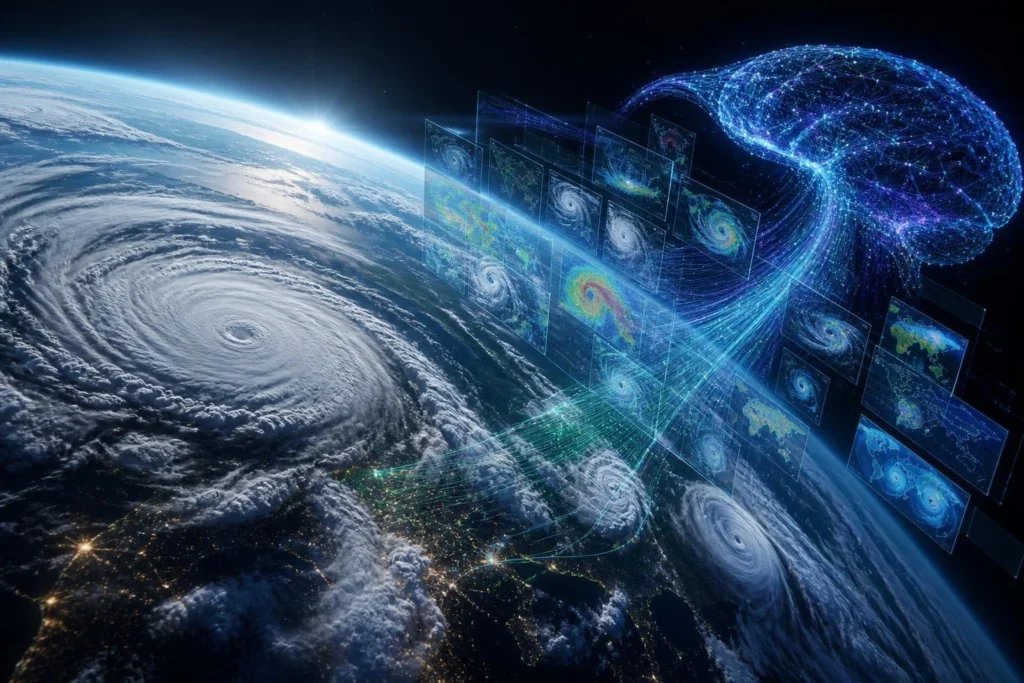
Weather forecasting technology has undergone remarkable transformation in recent decades, evolving from basic observational methods to sophisticated technological systems that can predict weather patterns with unprecedented accuracy. These advances are revolutionizing how we prepare for and respond to weather events.
Table of Contents
The Evolution of Weather Prediction
Historical Perspective
Weather forecasting has progressed through several technological eras:
- Manual observations and basic instruments
- Radio and telegraph communication networks
- Computer modeling and numerical weather prediction
- Satellite technology and remote sensing
- Modern AI and machine learning integration
Current Capabilities
Today’s weather forecasting achievements include:
- 7-day forecasts as accurate as 3-day forecasts from 30 years ago
- Precise hurricane track predictions saving thousands of lives
- Hyperlocal forecasting down to neighborhood levels
- Extended seasonal and climate predictions
- Real-time severe weather warnings
Artificial Intelligence and Machine Learning
Deep Learning Applications
AI is transforming weather prediction through:
- Pattern recognition in vast meteorological datasets
- Improved storm intensification forecasts
- Better precipitation timing and amount predictions
- Enhanced severe weather detection
- Automated forecast generation and updates
Neural Network Models
Advanced AI systems offer several advantages:
- Processing complex atmospheric interactions
- Learning from historical weather patterns
- Identifying subtle predictive indicators
- Reducing human error in interpretations
- Providing probabilistic forecast confidence levels
Real-time Data Processing
Machine learning enables rapid analysis of:
- Millions of weather observations hourly
- Satellite imagery and radar data
- Ocean temperature and current measurements
- Atmospheric pressure and wind patterns
- Social media and crowdsourced weather reports
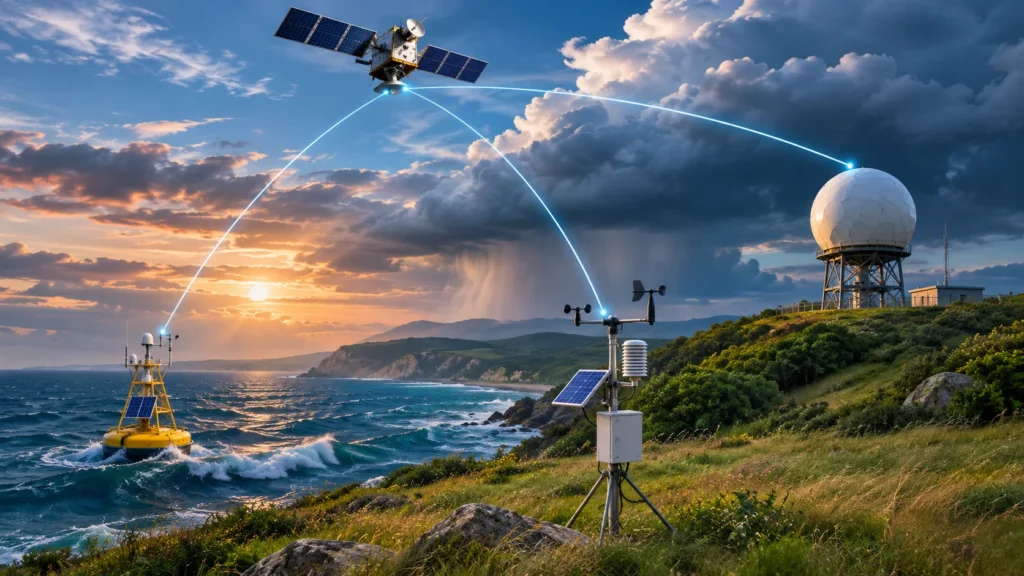
Satellite Technology Innovations
Next-Generation Weather Satellites
Modern satellites provide unprecedented capabilities:
- Higher resolution imaging (down to 0.5km)
- Faster data refresh rates (every 30 seconds)
- Improved atmospheric profiling
- Enhanced lightning detection
- Better storm structure analysis
Advanced Sensors and Instruments
Cutting-edge satellite technology includes:
- Hyperspectral imaging for detailed atmospheric composition
- Advanced microwave sounders for temperature profiles
- Lightning mappers for storm intensity monitoring
- Cloud particle analyzers for precipitation prediction
- Radio occultation for atmospheric density measurements
Global Coverage Improvements
Satellite constellations now offer:
- Continuous global monitoring
- Rapid disaster response capabilities
- Improved polar region observations
- Enhanced ocean weather tracking
- Better monitoring of remote areas
Supercomputing and Numerical Models
High-Performance Computing
Modern weather models require enormous computational power:
- Petaflop-scale processing capabilities
- Parallel processing across thousands of cores
- Complex mathematical atmospheric simulations
- Global grid resolutions under 10 kilometers
- Ensemble forecasting for uncertainty quantification
Model Resolution Improvements
Enhanced computing power enables:
- Finer spatial resolution for local weather
- Better representation of topographic effects
- Improved cloud and precipitation physics
- More accurate storm structure modeling
- Enhanced boundary layer representations
Ensemble Forecasting
Multiple model runs provide:
- Probability-based forecast confidence
- Uncertainty quantification for decision-making
- Better extreme weather event prediction
- Improved seasonal forecast skill
- Risk assessment for weather-sensitive operations
Internet of Things and Sensor Networks
Crowdsourced Weather Data
IoT devices expand observation networks:
- Personal weather stations contributing data
- Vehicle-based atmospheric measurements
- Smartphone barometric pressure readings
- Smart city sensor integration
- Agricultural weather monitoring networks
Citizen Science Contributions
Public participation enhances forecasting through:
- Weather observation apps and platforms
- Storm chasing and reporting networks
- Precipitation and snow measurement programs
- Air quality monitoring initiatives
- Phenology and climate impact tracking
Data Quality and Integration
Managing diverse data sources requires:
- Automated quality control systems
- Bias correction algorithms
- Data fusion and harmonization techniques
- Real-time validation processes
- Standardized reporting protocols
Radar Technology Advancements
Dual-Polarization Radar
Modern radar systems provide enhanced capabilities:
- Better precipitation type identification
- Improved rainfall rate estimation
- Enhanced hail detection and sizing
- Superior ground clutter rejection
- Increased tornado detection accuracy
Phased Array Technology
Next-generation radar offers:
- Rapid volume scanning (under 1 minute)
- Multiple simultaneous beam capabilities
- Improved storm evolution tracking
- Enhanced severe weather warning lead times
- Better aviation weather services
Mobile and Portable Systems
Deployable radar technology enables:
- Targeted storm research and monitoring
- Emergency response support
- Remote area weather surveillance
- Military and maritime applications
- Disaster recovery assistance
Ocean and Atmospheric Monitoring
Advanced Buoy Networks
Ocean observations contribute significantly to forecasting:
- Real-time sea surface temperature data
- Wave height and direction measurements
- Atmospheric pressure readings at sea
- Ocean current and salinity monitoring
- Hurricane intensity prediction improvements
Atmospheric Profiling
Vertical atmosphere measurements include:
- Weather balloon and radiosonde networks
- Aircraft-based meteorological observations
- Wind profiler and LIDAR systems
- Microwave radiometer networks
- GPS radio occultation measurements
Climate Integration
Long-term monitoring supports:
- Seasonal and subseasonal forecasting
- Climate pattern recognition and prediction
- Extreme weather frequency analysis
- Environmental trend identification
- Agricultural and water resource planning
Applications Across Industries
Aviation Weather Services
Enhanced forecasting benefits aviation through:
- Turbulence prediction and avoidance
- Icing condition forecasts
- Wind shear detection and warnings
- Visibility and ceiling predictions
- Route optimization for fuel efficiency
Maritime Operations
Improved marine forecasting provides:
- Wave and swell predictions
- Storm surge modeling and warnings
- Safe passage route planning
- Offshore operation safety assessments
- Fishing and recreational boating guidance
Agriculture and Food Security
Advanced weather prediction supports:
- Crop planting and harvesting decisions
- Pest and disease outbreak predictions
- Irrigation scheduling optimization
- Livestock management planning
- Food production risk assessments
Energy Sector Applications
Weather forecasting enhances energy operations:
- Renewable energy production forecasting
- Grid stability and demand prediction
- Power outage risk assessment
- Infrastructure protection planning
- Energy trading and market operations
Challenges and Limitations
Computational Constraints
Despite advances, challenges remain:
- Massive data processing requirements
- Model initialization complexities
- Computational resource limitations
- Real-time processing demands
- Cost-benefit optimization needs
Observational Gaps
Data collection limitations include:
- Ocean and polar region sparse coverage
- Developing country observation networks
- Upper atmospheric monitoring challenges
- Small-scale phenomenon detection
- Data transmission and communication issues
Prediction Boundaries
Physical and theoretical limits affect:
- Chaotic system predictability horizons
- Small-scale weather event forecasting
- Long-range seasonal prediction skill
- Extreme event rarity and modeling
- Climate feedback loop complexities
Future Innovations
Emerging Technologies
Next-generation developments include:
- Quantum computing applications
- Advanced AI and deep learning models
- Enhanced satellite sensor technology
- Improved numerical model physics
- Integrated Earth system modeling
Global Collaboration
International cooperation enhances:
- Data sharing and standardization
- Model development coordination
- Research and technology transfer
- Capacity building in developing regions
- Climate change adaptation planning
Commercial Weather Services
Private sector innovations drive:
- Specialized industry applications
- High-resolution local forecasting
- Custom weather risk assessments
- Real-time decision support systems
- Consumer weather app enhancements
Conclusion
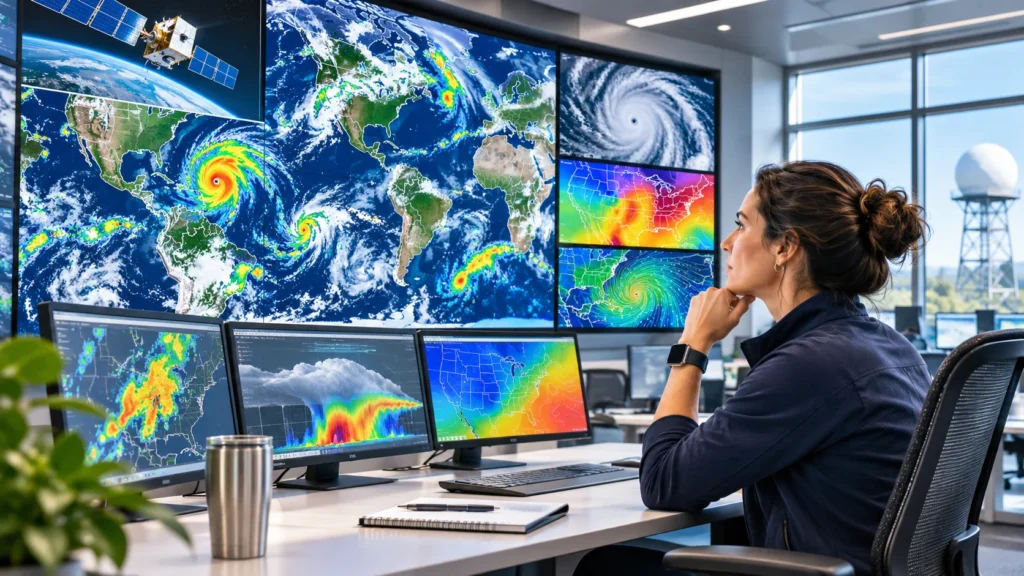
Revolutionary advances in weather forecasting technology continue to improve prediction accuracy, extend forecast horizons, and enhance our ability to prepare for weather-related challenges. From AI-powered models to sophisticated satellite systems, these innovations save lives, protect property, and support economic activities worldwide.
The future of weather forecasting promises even greater capabilities through emerging technologies and global collaboration. As climate change increases weather extremes, these technological advances become increasingly critical for public safety, economic stability, and environmental protection.
Understanding and leveraging these technological capabilities helps individuals, businesses, and governments make better weather-informed decisions, ultimately building more resilient and weather-ready communities.