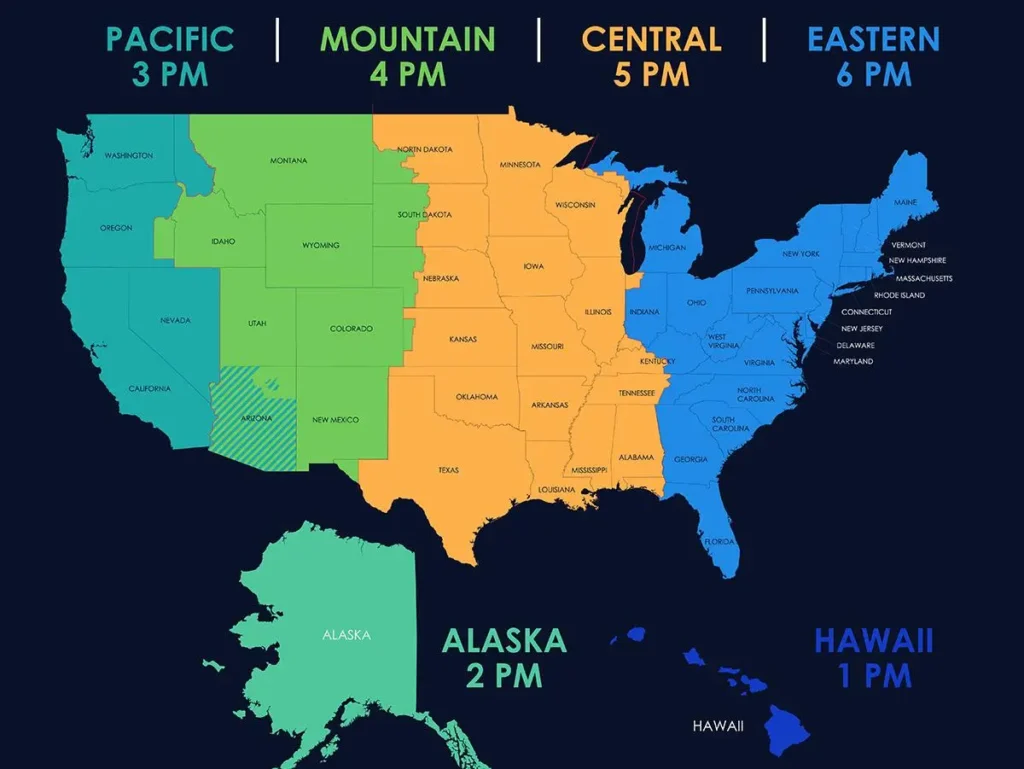

In today’s interconnected global economy, time zones for global business represent both significant opportunities and persistent challenges for international operations. Understanding and managing time zones for global business is essential for effective communication, smooth collaboration, and successful international expansion. Proper time zone management helps companies coordinate global teams, schedule international meetings, and improve productivity across different countries.
Table of Contents
The Foundation: What Are Time Zones Really?
Time zones are far more than simple geographical divisions. They represent complex political, economic, and cultural boundaries that reflect how societies organize their daily lives. The world is theoretically divided into 24 time zones, each spanning 15 degrees of longitude, but the reality is much more intricate.
The Political Reality of Time Zones
Countries often manipulate time zones for economic and political advantage. China, despite spanning five geographic time zones, operates on a single time (Beijing Time) to maintain national unity. Russia, conversely, spans 11 time zones, the most of any country, creating unique challenges for domestic businesses.
Economic Time Zone Strategies
Some countries have adopted strategic time zone alignments to facilitate business relationships. Several Middle Eastern countries adjusted their time zones to align more closely with European business hours, recognizing the economic value of temporal proximity to major trading partners.
The Comprehensive Business Impact of Time Zones
Advanced Communication Dynamics
The challenge extends beyond simple scheduling. Research from Harvard Business School shows that for every hour of time zone difference between team members, communication effectiveness decreases by approximately 8%. This compounds exponentially with distance.
Key Communication Strategies:
- Asynchronous-First Communication: Successful global companies adopt asynchronous communication as the default, with synchronous meetings as the exception
- Overlap Window Optimization: Identify and protect the golden hours when multiple time zones intersect for critical decisions
- Cultural Temporal Preferences: Germans prefer early morning meetings, while Latin Americans often favor later starts
Financial Market Complexities
Global financial markets create a 24-hour trading cycle that never sleeps. The major trading sessions are:
Asian Session: Tokyo (9 PM – 6 AM EST) – Dominated by JPY, AUD, and regional currencies
European Session: London (3 AM – 12 PM EST) – Peak liquidity for EUR, GBP, and commodity currencies
American Session: New York (8 AM – 5 PM EST) – USD dominance and highest volume
Understanding these cycles is crucial for:
- Currency exchange timing
- International payment processing
- Risk management across markets
- Earnings announcements and their global impact

Customer Service Excellence Across Time Zones
Providing truly global customer service requires more than 24/7 availability. It demands understanding when your customers prefer to receive support and how their cultural context affects their expectations.
Advanced Customer Service Strategies:
- Predictive Staffing Models: Use historical data to predict customer contact patterns by time zone
- Cultural Service Adaptation: Adjust service styles based on cultural communication preferences
- Follow-the-Sun Support: Seamlessly hand off complex cases between time zones without information loss Read More
Strategic Time Zone Management Frameworks
The UTC Foundation Strategy
While UTC serves as the global standard, successful businesses go beyond simple UTC conversion. They develop comprehensive temporal frameworks that account for:
Business UTC Mapping: Create a master schedule that maps all critical business functions to UTC
Seasonal Adjustment Protocols: Develop systematic approaches to handle the bi-annual chaos of daylight saving time changes
Cultural Time Preferences: Understand that not all cultures view punctuality and time with the same importance
Advanced Daylight Saving Time Management
Daylight Saving Time (DST) affects over 70 countries but not uniformly. The EU is phasing out DST, while the United States continues the practice. This creates shifting time relationships twice per year that can disrupt:
- Automated systems and scheduled processes
- Standing meeting schedules
- Customer communication timing
- Financial transaction processing windows
DST Management Best Practices:
- Automated Time Zone Libraries: Use robust, automatically updating time zone libraries in all systems
- Pre-Change Communication: Alert all stakeholders 30 days before DST changes
- System Testing: Test all automated processes during DST transition periods
- Backup Communication Channels: Prepare alternative communication methods for time-sensitive operations
Cultural Temporal Intelligence
Different cultures have vastly different relationships with time, which affects business operations:
Monochronic Cultures (Germany, Switzerland, Japan): Time is linear, punctuality is paramount, schedules are sacred
Polychronic Cultures (Latin America, Middle East, parts of Africa): Time is flexible, relationships trump schedules, multitasking is normal
This affects:
- Meeting effectiveness and participation
- Deadline interpretation and compliance
- Decision-making timelines
- Customer service expectations
Technology Infrastructure for Global Operations
Enterprise-Grade Time Zone Tools
Modern global businesses require sophisticated technology stacks that go beyond simple world clocks:
Integrated Calendar Systems: Microsoft 365 and Google Workspace offer time zone-aware scheduling, but require proper configuration and user training
Specialized Business Tools:
- When2meet: Optimal for finding meeting times across multiple time zones
- World Clock Pro: Enterprise features for tracking multiple time zones simultaneously
- TimeBridge: Advanced scheduling with time zone intelligence
- Calendly: Automated scheduling that respects time zone preferences
Communication Platforms with Time Zone Intelligence:
- Slack: Shows local time for team members and can schedule message delivery
- Microsoft Teams: Integrates with Outlook for intelligent meeting scheduling
- Zoom: Automatically adjusts meeting times for participants’ time zones
System Integration Strategies
Successful global businesses integrate time zone awareness into every system:
CRM Integration: Salesforce and HubSpot can track prospect time zones for optimal outreach timing
Project Management: Asana, Monday.com, and Jira display deadlines in local time zones
Financial Systems: ERP systems must handle multi-time zone transaction recording and reporting
Advanced Scheduling Methodologies
The Global Meeting Matrix
Create a standardized approach to scheduling that considers:
Priority Time Zones: Identify which time zones house your most critical stakeholders
Rotating Schedule Equity: Ensure no single time zone always bears the burden of inconvenient meeting times
Meeting Type Optimization: Different meeting types work better at different times
- Information Sharing: Can be asynchronous or recorded
- Decision Making: Requires synchronous participation from key stakeholders
- Brainstorming: Benefits from high-energy time slots for participants
The 24-Hour Handoff System
For continuous operations, develop formal handoff protocols:
Documentation Standards: Ensure every time zone transition includes complete status updates
Escalation Procedures: Clear protocols for when issues require cross-time zone collaboration
Knowledge Management: Centralized systems that allow teams to pick up where others left off
Measuring Success in Global Time Zone Management
Key Performance Indicators
Track these metrics to evaluate your time zone management effectiveness:
Meeting Efficiency Metrics:
- Average meeting duration across time zones
- Participation rates by time zone
- Post-meeting action item completion rates
Communication Effectiveness:
- Response time patterns by time zone pairing
- Escalation rates for time zone-related confusion
- Customer satisfaction scores by time zone
Business Impact Measures:
- Deal closure rates by time zone coordination complexity
- Project completion times for global vs. local teams
- Customer retention rates by support time zone coverage
Industry-Specific Time Zone Considerations
Financial Services
Banks and financial institutions face unique challenges:
- Regulatory reporting deadlines that vary by jurisdiction
- Market close coordination for portfolio management
- Customer trading hour optimization
- Cross-border payment processing windows
Manufacturing and Supply Chain
Global manufacturing requires precise coordination:
- Production handoffs between facilities
- Supplier communication optimization
- Just-in-time delivery coordination across borders
- Quality control reporting across shifts
Technology and Software Development
Tech companies pioneered many time zone management practices:
- Follow-the-sun development models
- Continuous integration across time zones
- Global customer support for SaaS platforms
- International product launch coordination
Future Trends in Global Time Zone Management
Artificial Intelligence Integration
AI is beginning to revolutionize time zone management:
- Predictive Scheduling: AI can predict optimal meeting times based on historical data
- Automatic Rescheduling: Smart systems can automatically adjust schedules when conflicts arise
- Cultural Intelligence: AI can factor cultural time preferences into scheduling decisions
Remote Work Evolution
The permanent shift to remote work has made time zone management skills essential for all businesses, not just global corporations. This democratization of global work patterns requires new approaches to:
- Inclusive meeting practices
- Asynchronous collaboration tools
- Time zone equity in team management
Blockchain and Decentralized Organizations
Decentralized Autonomous Organizations (DAOs) operate across all time zones simultaneously, requiring new governance and decision-making models that aren’t bound by traditional business hours.
Practical Implementation Roadmap
Phase 1: Assessment and Planning (Month 1)
- Current State Analysis: Audit existing time zone practices and pain points
- Stakeholder Mapping: Identify all time zones where you have critical relationships
- Tool Evaluation: Assess current technology stack for time zone capabilities
Phase 2: Foundation Building (Months 2-3)
- Policy Development: Create comprehensive time zone management policies
- Tool Implementation: Deploy enterprise-grade scheduling and communication tools
- Team Training: Educate all team members on time zone best practices
Phase 3: Optimization and Scaling (Months 4-6)
- Process Refinement: Continuously improve based on feedback and metrics
- Advanced Features: Implement AI-powered scheduling and cultural intelligence
- Global Expansion: Apply lessons learned to new markets and time zones

Conclusion: The Strategic Advantage of Time Zone Mastery
In my 15 years of international business consulting, I’ve observed that companies with superior time zone management capabilities consistently outperform their competitors in global markets. They close deals faster, maintain stronger international relationships, and scale more effectively across borders.
The businesses that master time zone management don’t just accommodate global operations—they leverage temporal differences as competitive advantages. They use follow-the-sun models to accelerate product development, optimize customer service costs through global staffing arbitrage, and create 24-hour business cycles that never sleep.
The future belongs to organizations that think globally about time, not just geography. As remote work becomes permanent and business becomes increasingly global, time zone management skills will separate the successful international companies from those that struggle with global complexity.
Key Takeaway: Time zone management is not a logistical challenge to be solved—it’s a strategic capability to be mastered. Companies that invest in sophisticated time zone management systems, cultural temporal intelligence, and global communication protocols will dominate their industries in the coming decade.
The world operates on time, and businesses that understand how to navigate, leverage, and optimize across all 24 time zones will capture the greatest share of the global economy.